19 · Cultural aesthetic · 1980s onward

Cyberpunk

Neon, dark, technological

Draft profile · not yet reviewed against sources

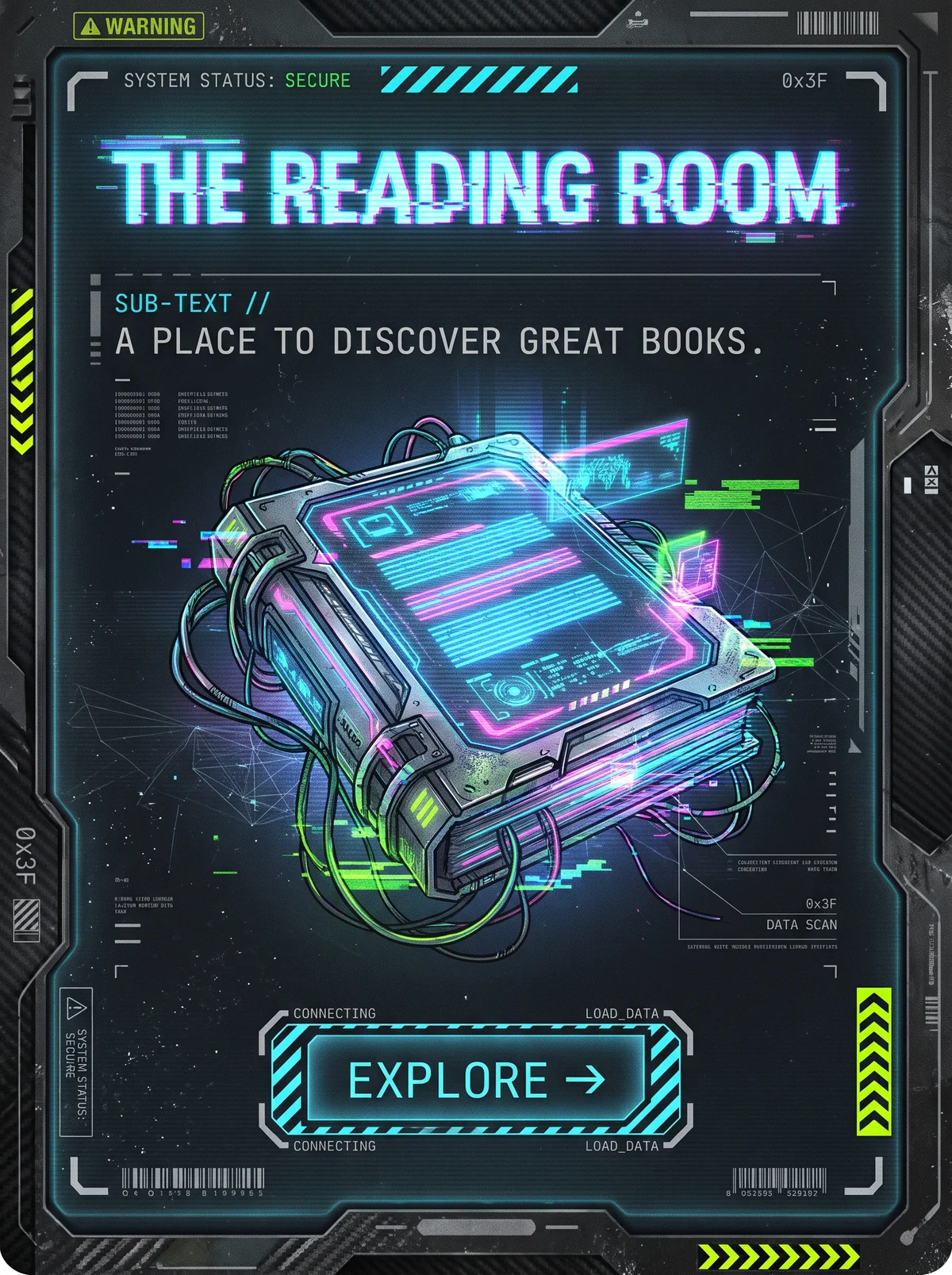
Dark interface-style poster framed like a heads-up display with metal panels, warning chevrons, hex codes, and barcodes. A warning label and "System status: secure" sit at the top. "The Reading Room" glows in neon cyan and magenta capitals with a glitch effect. Monospace text reads "Sub-text // A place to discover great books." In the center, a book rendered as a wired, glowing electronic device. At the bottom, a bracketed neon button reading "Explore" with an arrow.
The Reading Room in Cyberpunk. An interpretation of the shared “The Reading Room” brief, not a historical work. Supplied by Ryan Grissinger.

Philosophy

High tech, low life. Dense, neon-lit futures where technology is everywhere and power is unequal.

Historical context

Origins
Science fiction literature and film of the 1980s, including William Gibson's Neuromancer and Blade Runner.
Period
1980s onward
Influences
Film noir, Science fiction literature, Japanese urban landscapes, Hacker culture
Notable figures
Syd Mead

Drafted from general design history. Sources pending.

What the example shows

Observations tied to the taxonomy, including where the example departs from the profile.

  • 12 · Contrast & Value

    Neon cyan and magenta glow against near-black, the style's extreme contrast.

  • 02 · Typography

    Condensed technical capitals for the title and monospace for system text, treating copy as data.

  • 07 · Space & Density

    Dense heads-up-display furniture fills the margins: status labels, hex codes, barcodes, and chevrons.

  • 17 · Interaction & Feedback

    The Explore button sits inside a bracketed frame, styled as a system control rather than a link.

  • 16 · Motion & Animation

    In a working interface, the glitched title would need a reduced-motion alternative.

Often confused with

The styles closest to Cyberpunk, and what sets each apart.

Vaporwave

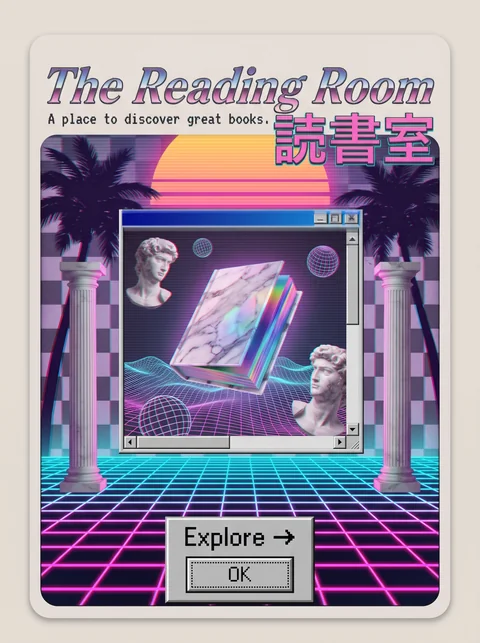
Both glow with neon, but Cyberpunk is a gritty vision of the future, while Vaporwave is an ironic, dreamy nostalgia for 1980s and 1990s consumer culture.

19 · Mood & Personality
Cyberpunk Tense, dark, and dangerous.
Vaporwave Hazy, ironic, and melancholic.
13 · Imagery & Illustration
Cyberpunk Dense cities, rain, and machines.
Vaporwave Greek busts, palm trees, and old operating-system windows.
01 · Color
Cyberpunk Neon on black.
Vaporwave Pink, cyan, and lavender, with sunset gradients.
20 · Historical & Cultural References
Cyberpunk 1980s science fiction.
Vaporwave A 2010s internet art and music movement.

View Vaporwave

Retro-Futurism

Retro-Futurism imagines a bright, hopeful future; Cyberpunk imagines a dark, crowded one, lit by neon and run by corporations.

19 · Mood & Personality
Cyberpunk Dystopian and gritty.
Retro-Futurism Utopian and a little naive.
01 · Color
Cyberpunk Neon magenta and cyan on black.
Retro-Futurism Teal, orange, and cream daylight colors.
13 · Imagery & Illustration
Cyberpunk Rain-slick cities, screens, and implants.
Retro-Futurism Rockets, planets, and gleaming machines.
20 · Historical & Cultural References
Cyberpunk 1980s science fiction, from Blade Runner and Neuromancer.
Retro-Futurism The 1950s and 1960s picture of the future.
View Retro-Futurism

Comparisons are drafted from general design history and not yet checked against sources.

The style, layer by layer

Described with the Laboratory's shared vocabulary, from the elements up to digital behavior.

Foundation · fine art

The elements

Color
neon electric dark
Typography
technical condensed monospace
Shape & geometry
angular hard edged
Line & borders
glowing thin
Texture & material
metallic luminous
Imagery
glitch diagrammatic
Ornamentation
decorative

Graphic design adds

The principles

Layout & grid
dense fragmented
Space & density
dense
Balance
tense
Rhythm
kinetic
Hierarchy
dramatic
Contrast
extreme

Web design adds

Digital expression

Dimensionality
layered
Motion
glitch kinetic
Interaction
immediate
Navigation
unconventional

Across every layer

Mood and personality

neon dark technological gritty

Building in this style

Advisory guidance for a web interface. A demonstration may interpret the style differently.

Do

  • Set neon accents against near-black backgrounds.
  • Use condensed technical type and monospace data.
  • Layer HUD-style frames, scan lines, and glitch.
  • Pack information densely, like a heads-up display.

Avoid

  • Warm natural palettes.
  • Soft rounded shapes.
  • Generous empty space.

Working palette

  • #0A0A12

    Background

  • #E6F1FF

    Foreground

  • #FF2A6D

    Primary

  • #05D9E8

    Secondary

  • #F9F871

    Accent

Headings
condensed technical sans
Body
monospace
Corner radius
0px
Borders
glowing hairline

Accessibility

  • Glitch and flicker effects need a reduced-motion alternative and must never flash rapidly.
  • Dense layouts need strong headings and landmarks for screen readers.

Responsive behavior

  • Collapse HUD panels into tabs on small screens.

Sources

Sources pending. This profile was drafted from general design history and has not yet been checked against primary or scholarly sources.

π